Meta-Frameworks Are Becoming the New Default for Modern Web Development
 18 Feb
Meta-Frameworks Are Becoming the New Default for Modern Web Development
The way web applications are built has evolved dramatically over the past decade. Developers once spent countless hours configuring routers, bundlers, and build tools before writing a single feature. Today, meta-frameworks in web development are eliminating that complexity and becoming the new standard for professional web projects.
Meta-frameworks in web development combine multiple development layers into one unified solution. Instead of assembling separate tools for routing, data fetching, rendering, and APIs, developers can now rely on a single structured framework to handle everything efficiently.
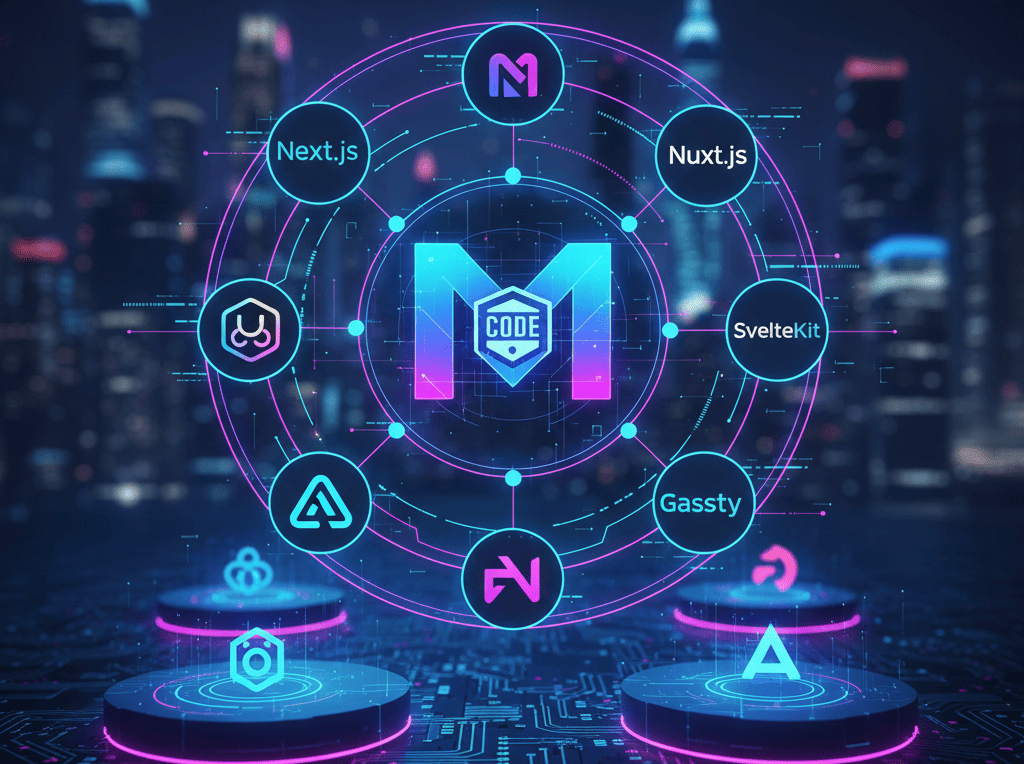
Frameworks like Next.js, Nuxt, and Astro are leading this transformation by offering powerful full-stack development capabilities while reducing setup time and technical overhead.
What Are Meta-Frameworks?
Meta-frameworks are advanced frameworks built on top of core JavaScript libraries. They extend the functionality of frontend libraries and provide integrated solutions for both frontend and backend development. These frameworks typically include:
- Built-in routing systems
- Server-side rendering and static site generation
- Integrated API handling
- Advanced caching and performance optimization
- Simplified deployment workflows
This all-in-one approach allows development teams to focus more on building features and delivering user value rather than managing infrastructure and configurations.
Why Meta-Frameworks in Web Developement Are Becoming Industry Standards
- Faster Development and Reduced Complexity
Meta-frameworks eliminate the need to manually configure multiple tools. Development teams can launch projects faster and maintain cleaner, more structured codebases. - Improved Performance and SEO
Modern meta-frameworks support server-side rendering and static generation, which significantly improve website performance, loading speed, and search engine visibility. Faster websites often result in better user experience and higher search rankings. - Lower Infrastructure Costs
With server functions and built-in backend capabilities, businesses can reduce the need for separate backend services. Many applications can now operate efficiently with simplified hosting and infrastructure setups. - Scalability for Growing Businesses
Meta-frameworks provide flexible rendering strategies that allow applications to scale smoothly as traffic increases. This ensures long-term stability for business-critical platforms.
The Impact of AI on Meta-Framework Adoption
The rise of AI-powered development tools is accelerating the adoption of meta-frameworks. Many generative UI builders automatically create projects using modern meta-framework structures.
For example, tools developed by Vercel now generate ready-to-use applications that follow meta-framework architecture by default. This demonstrates how the industry is moving toward standardized, production-ready project structures.
As AI continues to automate development workflows, meta-frameworks will likely remain the foundation for scalable and maintainable web applications.
Real Business Benefits of Using Meta-Frameworks in Web Developement
Companies that adopt meta-framework solutions often experience measurable improvements, including:
- Faster project delivery timelines
- Enhanced website performance
- Reduced maintenance complexity
- Improved SEO rankings
- Lower long-term development costs
For businesses aiming to stay competitive in the digital landscape, adopting modern frameworks is becoming less of an option and more of a necessity.
The Future of Web Development
The future of web development is clearly moving toward unified full-stack solutions. Meta-frameworks are redefining how applications are built by simplifying development processes while improving performance and scalability.
As technologies continue to evolve, companies that adopt modern development standards early gain a significant competitive advantage.
Frequently Asked Questions
What is a meta-framework?
A meta-framework is a development framework that builds on top of frontend libraries and provides integrated tools for routing, rendering, backend functionality, and deployment.
Why are meta-frameworks important for SEO?
Meta-frameworks improve website performance through server-side rendering and static page generation, which help search engines index content more effectively.
Are meta-frameworks suitable for large business applications?
Yes. Meta-frameworks are highly scalable and are widely used for enterprise-level platforms and complex web applications.
Do meta-frameworks replace traditional backend development?
In many cases, meta-frameworks can handle backend tasks using server functions and integrated APIs, reducing the need for separate backend services.
Are meta-frameworks expensive to implement?
They often reduce long-term development and infrastructure costs by simplifying project architecture and improving efficiency.
Ready to Build Faster, Smarter, and More Scalable Web Applications?
At our software development company, we help businesses leverage modern meta-framework technologies to create high-performance, SEO-optimized, and scalable web platforms. Whether you are launching a new digital product or upgrading an existing system, our team delivers solutions tailored to your business goals.
Contact StepToMedia today to start building your next-generation web application.