React Native vs Flutter: Which is Best for Mobile App Development in 2026
 12 Feb
React Native vs Flutter: Which is Best for Mobile App Development in 2026
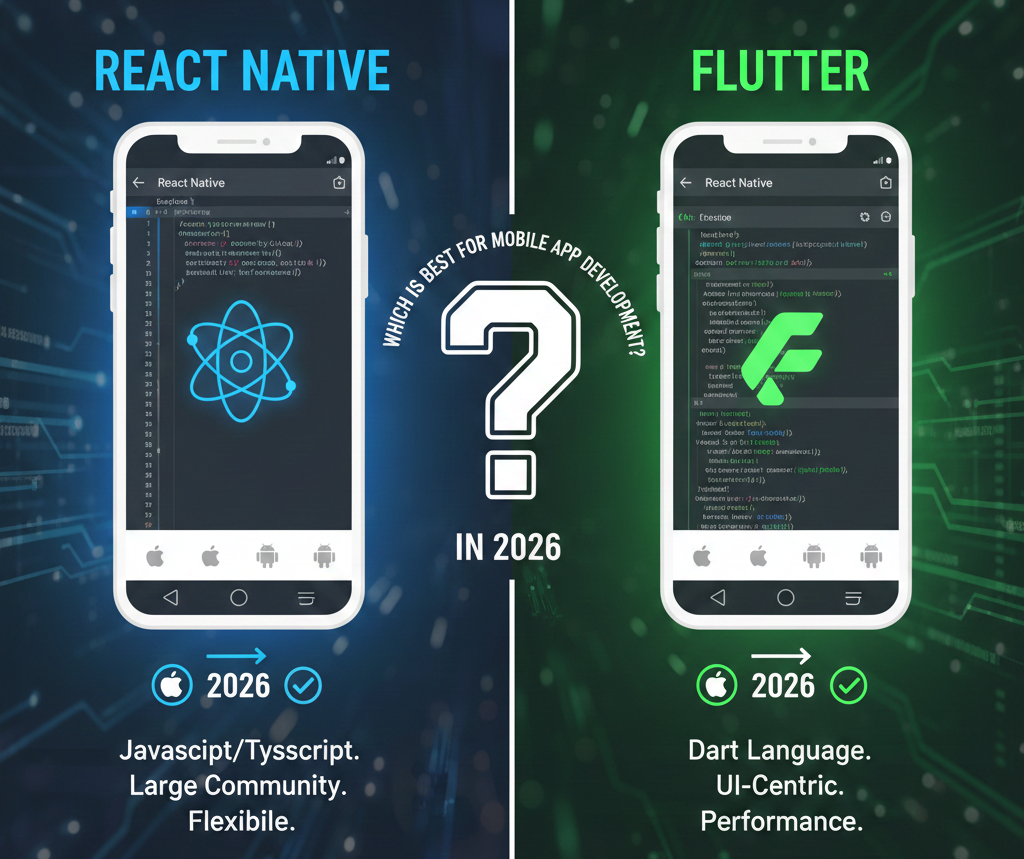
Choosing the right framework is one of the most important decisions when developing a mobile app. React Native vs Flutter is a common debate among businesses and developers. Both frameworks allow cross-platform development, but React Native often stands out due to its faster development cycles, cost-effectiveness, and strong community support. This article explains why React Native is frequently the preferred choice for companies around the world.
1. React Native vs Flutter: Community and Ecosystem
React Native has a large and active developer community because it has been around since 2015. This means:
- Extensive libraries and ready-made components
- Faster troubleshooting and support
- Easier access to experienced developers globally
Flutter, while powerful, has a smaller community, which can make finding solutions or developers slightly more challenging.
2. React Native vs Flutter: Development Speed and Code Reusability
React Native allows code sharing between iOS and Android, often up to 90%. This leads to:
- Shorter development time
- Lower costs
- Easier maintenance and updates
Flutter also supports cross-platform development, but React Native’s JavaScript-based ecosystem makes integration with existing web projects simpler.
3. React Native vs Flutter for MVP and Startup Apps
For startups and MVPs (Minimum Viable Products), React Native offers:
- Hot-reloading for faster testing
- Pre-built components for quicker UI design
- Easier debugging and developer tools
This makes React Native ideal for companies looking to launch apps quickly without sacrificing quality.
4. Seamless Integration with Existing Apps
If your business already has a native app, React Native can integrate easily with existing iOS and Android code. Flutter may require more extensive rewrites to achieve similar integration.
5. Performance and User Experience
While Flutter is known for smooth animations and performance, React Native provides a balanced performance suitable for most apps, while allowing customization to meet business requirements without needing to learn Dart (Flutter’s programming language).
6. Cost-Effectiveness
React Native reduces development costs because:
- Development cycles are shorter
- It’s easier to hire developers worldwide
- Maintenance costs are lower due to shared codebase and mature ecosystem
For businesses globally, React Native is often the preferred framework for mobile app development due to its strong community support, faster development, code reusability, seamless integration, and cost-effectiveness. While Flutter has unique advantages, React Native provides a reliable, scalable, and efficient solution for building high-quality apps.
Frequently Asked Questions
What is the main difference between React Native and Flutter?
React Native uses JavaScript and allows easier integration with existing apps, while Flutter uses Dart and offers a highly customizable UI but requires more specialized knowledge.
Is React Native faster to develop than Flutter?
Yes. React Native often allows faster development due to hot-reloading, reusable components, and a mature ecosystem with libraries and community support.
Can I build apps for both iOS and Android with React Native?
Absolutely. React Native supports cross-platform development, enabling you to share most of the code between iOS and Android apps.
Which framework is more cost-effective?
React Native is generally more cost-effective because of faster development cycles, reusable code, and easier hiring of developers worldwide.
Can React Native integrate with existing native apps?
Yes, React Native can seamlessly integrate with existing iOS or Android apps, making it ideal for companies updating or extending their applications.
Ready to Build Your Mobile App?
Our software company specializes in React Native mobile app development for businesses worldwide. We deliver scalable, secure, and high-performance apps tailored to your needs. Services include:
- iOS & Android Mobile Apps
- Cross-Platform App Development
- Custom App Features and Integrations
- App Maintenance and Support
Contact StepToMedia today to discuss your project and get a free consultation and start building your mobile app with React Native!