Why Digital Transformation Is the Key to Business Survival
 3 Mar
3 MarWhy Digital Transformation Is the Key to Business Survival
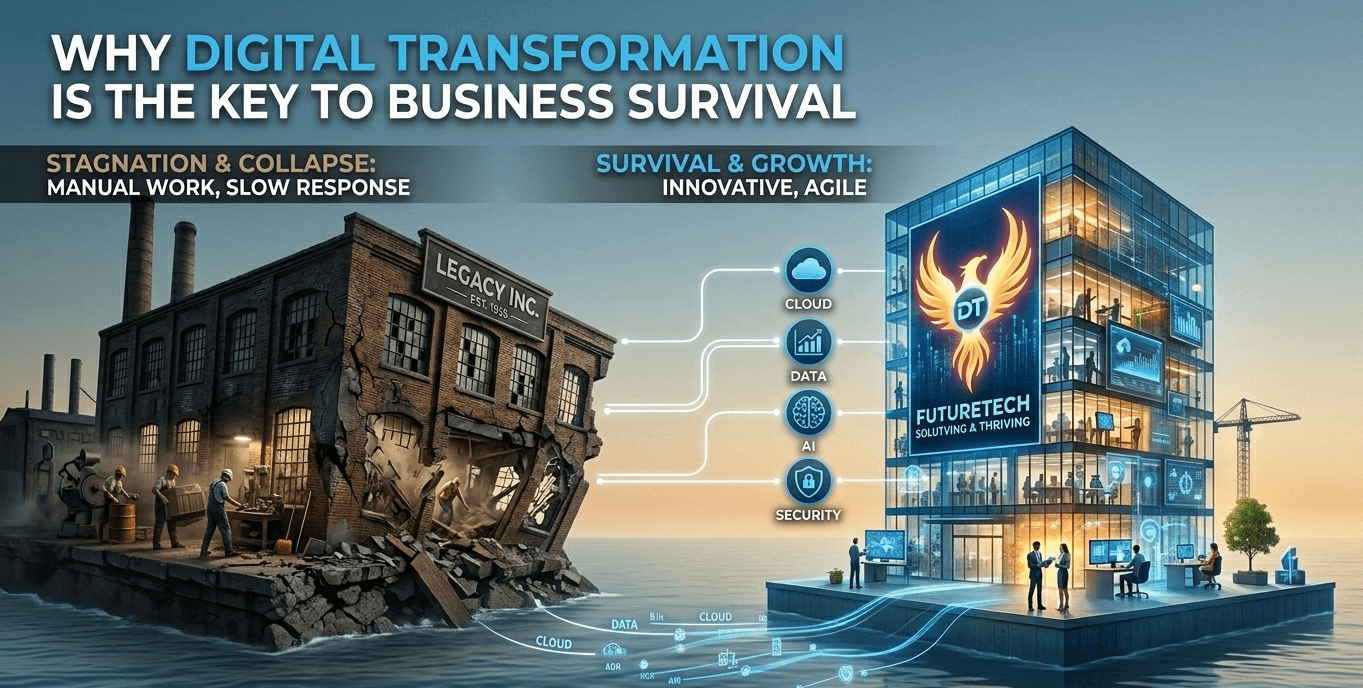
In today’s fast-changing marketplace, businesses that fail to adapt to digital advancements risk falling behind. Customer expectations are evolving, competition is increasing, and technology is reshaping every industry.
Digital transformation is no longer optional it is essential for long-term survival and growth. Companies that embrace digital tools, automation, and data-driven strategies are better positioned to compete, innovate, and thrive.
What Is Digital Transformation?
Digital transformation is the integration of digital technologies into all areas of a business to improve operations, customer experience, and overall performance. It includes:
- Cloud computing adoption
- Business process automation
- Data analytics implementation
- Mobile and web solutions
- Digital customer engagement strategies
It’s not just about technology , it’s about transforming how a business operates and delivers value.
Why Digital Transformation Is Critical for Business Survival
1.Meeting Changing Customer Expectations
Modern customers expect fast responses, seamless online experiences, and personalized services. Digital transformation enables businesses to:
- Offer online services and mobile accessibility
- Personalize customer interactions
- Provide real-time support
- Improve overall user experience
Companies that fail to meet these expectations risk losing customers to more agile competitors.
2.Increasing Operational Efficiency
Manual processes slow businesses down and increase costs. Digital tools help companies:
- Automate repetitive tasks
- Reduce human errors
- Improve workflow efficiency
- Optimize resource allocation
This leads to faster operations and higher profitability.
3.Enabling Data-Driven Decisions
Data is one of the most valuable business assets. Digital transformation allows organizations to:
- Collect and analyze real-time data
- Forecast trends
- Measure performance accurately
- Make informed strategic decisions
Businesses that rely on data outperform those that rely on guesswork.
4.Enhancing Business Agility
Markets change quickly. Digital-ready companies can adapt faster to:
- Economic shifts
- Customer behavior changes
- Industry disruptions
- Competitive pressures
Agility is essential for survival in today’s competitive landscape.
5.Strengthening Competitive Advantage
Companies that adopt modern technologies gain a strong edge by:
- Delivering better customer experiences
- Launching products faster
- Reducing operational costs
- Innovating continuously
Digital transformation empowers businesses to stay ahead rather than struggle to catch up.
Common Challenges in Digital Transformation
While the benefits are clear, some businesses face obstacles such as:
- Resistance to change
- Lack of clear strategy
- Budget limitations
- Cybersecurity concerns
Overcoming these challenges requires leadership commitment, proper planning, and expert guidance.
How to Start Your Digital Transformation Journey
- Define clear business objectives.
- Assess current technology and workflows.
- Identify areas that need improvement.
- Choose scalable and secure digital solutions.
- Train your team and monitor progress.
Digital transformation is an ongoing process, not a one-time project.
Ready to transform your business digitally?
Our team specializes in helping companies implement secure, scalable, and customized digital solutions that drive efficiency and growth.
Contact StepToMedia to start your digital transformation journey.
Frequently Asked Questions
1.What does digital transformation mean for businesses?
It means integrating digital technologies into operations to improve efficiency, customer experience, and decision-making.
2.Is digital transformation only for large companies?
No. Businesses of all sizes can benefit from adopting digital tools and strategies.
3.How long does digital transformation take?
It depends on the business size and goals, but it is typically an ongoing process.
4.What are the biggest risks of not transforming digitally?
Loss of competitiveness, declining customer satisfaction, and reduced operational efficiency.
5.Where should a company start with digital transformation?
Start by identifying operational gaps and defining clear digital objectives aligned with business goals.

No next post available