Behind the Scenes: Our Software Development Process
 1 Jun
1 JunBehind the Scenes: Our Software Development Process
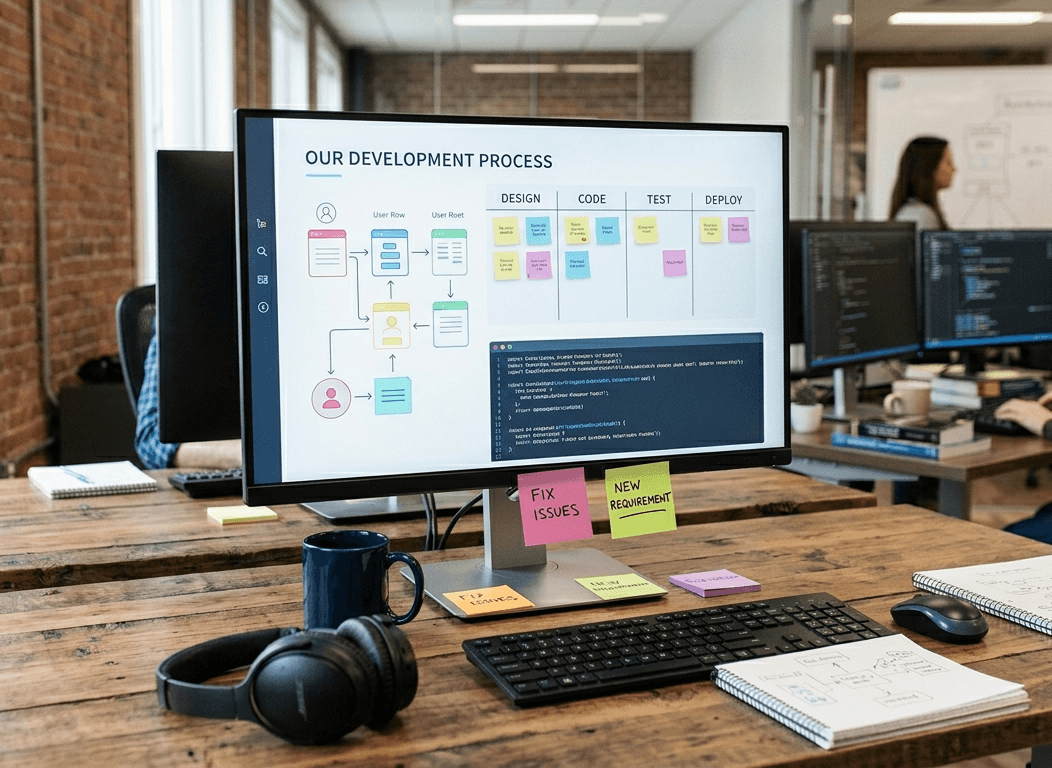
In today’s fast-moving digital world, successful software is not just about writing code—it’s about following a structured, well-planned development process. Many businesses focus only on features and delivery speed, but what truly determines long-term success is how the software is designed, built, tested, and maintained.
A poorly structured development process can lead to delays, bugs, performance issues, and costly rewrites. On the other hand, a strong and disciplined workflow ensures scalability, security, and a smooth user experience from day one.
In this article, we take you behind the scenes of how our team transforms ideas into fully functional, production-ready digital solutions.
1. Discovery & Requirement Analysis
Every successful project begins with understanding the business problem. During this phase, we collaborate closely with stakeholders to define project goals, user needs, and functional requirements. This step ensures that everyone shares a clear vision before development begins.
Skipping or rushing this phase often leads to misaligned expectations, feature changes, and increased costs later in the project lifecycle.
2. System Architecture & Technical Planning
Once requirements are clear, we design the system architecture—the backbone of the entire application. This includes selecting the right technology stack, defining system components, structuring databases, and planning API integrations.
A well-designed architecture ensures that the application remains scalable, maintainable, and efficient even as user demand grows over time.
3. UI/UX Design
User experience plays a crucial role in the success of any software product. Our design team creates intuitive interfaces, wireframes, and prototypes that focus on usability, accessibility, and responsiveness across all devices.
We validate designs early in the process to ensure that the final product aligns with user expectations and business goals.
4. Agile Development Process
Development is carried out in structured agile cycles, allowing continuous progress and flexibility. Our developers build features incrementally while following clean code practices, version control, and regular code reviews.
This approach ensures better collaboration between teams, faster delivery, and higher code quality throughout the project.
5. Testing & Quality Assurance
Before any release, we rigorously test every part of the system to ensure stability and performance. This includes functional testing, performance checks, security validation, and cross-platform compatibility testing.
Quality assurance helps us detect and fix issues early, ensuring a smooth and reliable user experience.
6. Deployment & Launch
Once testing is complete, the application is deployed to a secure production environment. We carefully manage the release process to ensure minimal downtime, proper configuration, and a seamless transition from development to live usage.
At this stage, the product becomes fully available to users.
7. Maintenance & Continuous Improvement
Our responsibility doesn’t end after launch. We continuously monitor system performance, fix issues, release updates, and introduce improvements based on user feedback and business needs.
This ensures that the software remains modern, secure, and competitive in a constantly evolving digital landscape.
Why Our Process Works
Our development approach is built on:
Clear communication at every stage
Strong technical architecture planning
Agile and flexible development cycles
Focus on scalability and performance
Commitment to long-term quality
This structured workflow allows us to deliver software that not only works today but continues to perform and evolve in the future.
Ready to Build Your Next Software Product?
Whether you’re starting a new digital project or improving an existing system, the right development process makes all the difference.
Contact StepToMedia today and let’s build scalable, secure, and high-quality software tailored to your business goals.
Frequently Asked Questions
What is a software development process?
It is a structured workflow used to plan, design, build, test, and deploy software applications efficiently and reliably.
Why is a structured development process important?
It ensures better quality, fewer bugs, improved scalability, and reduced long-term costs.
What is agile development?
Agile development is an iterative approach where software is built in small, manageable cycles with continuous feedback and improvement.
How long does a software project usually take?
Timelines vary depending on complexity, features, and scope, ranging from a few weeks to several months.
Do you provide post-launch support?
Yes, we provide ongoing maintenance, updates, and performance monitoring after deployment.
01 Jun, 2026
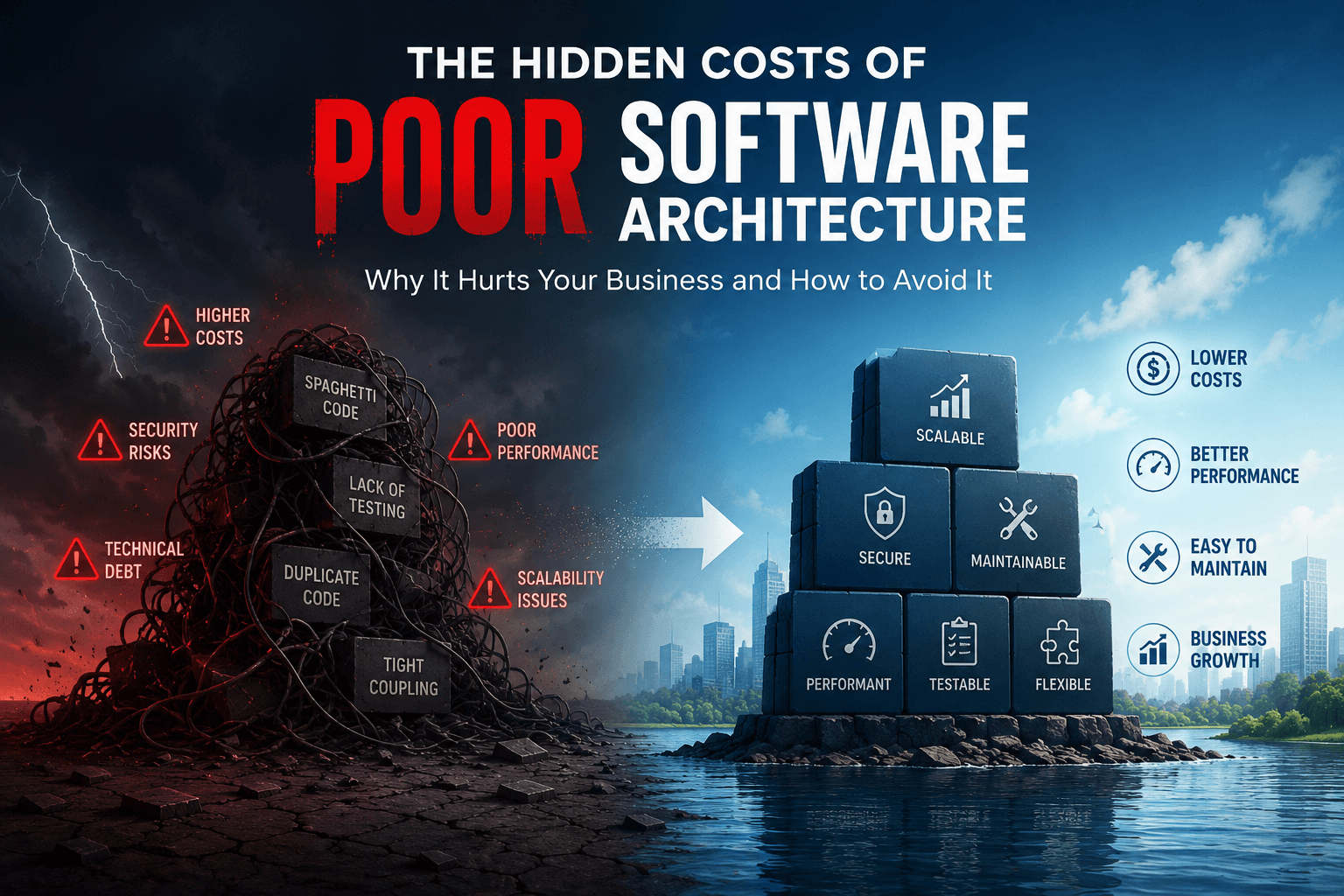
The Hidden Costs of Poor Software Architecture
02 Jun, 2026
AI in Business: Opportunities and Challenges