Arabic English App Development for KSA: A 2026 Guide to Bilingual Saudi Apps
Arabic English App Development for KSA: A 2026 Guide to Bilingual Saudi Apps
 18 Nov
Arabic English App Development for KSA: A 2026 Guide to Bilingual Saudi Apps
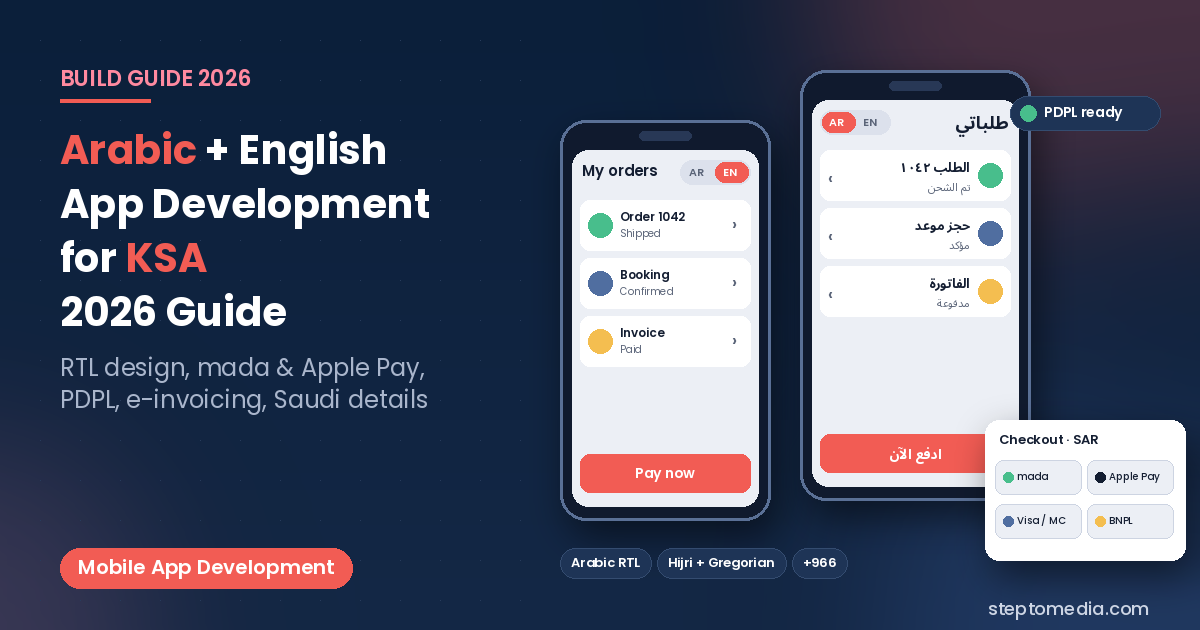
Arabic English app development for KSA is not the same as translating an English app at the end. Saudi users expect an Arabic-first experience, local payment methods, and a product that respects how data is handled in the Kingdom. This 2026 guide explains what a bilingual Arabic and English app for Saudi Arabia needs: right-to-left design, mada and Apple Pay, the Personal Data Protection Law (PDPL), e-invoicing, dates and addresses, and how to plan the build with a team in Lebanon.
Step To Media is a software development agency in Lebanon based in Mkalles. We build mobile apps, websites and custom software for businesses in Lebanon and the GCC.
Why Saudi Apps Should Be Arabic-First
Many apps aimed at Saudi Arabia are designed in English and translated late. The result shows: icons point the wrong way, Arabic text overflows buttons and the tone reads like a machine translation. Many Saudi users prefer Arabic, so it deserves the same design attention as English.
Arabic-first does not mean Arabic-only. Saudi Arabia has a large expatriate workforce, and many business apps, field apps and B2B portals need full English as well. The goal is one product that feels native in both languages, with the user free to switch at any time.
Right-to-Left Design Done Properly
Right-to-left (RTL) support touches the whole interface, not just the text direction. A solid bilingual app covers:
- Mirrored layouts: navigation, back buttons, progress steps, sliders and swipe gestures follow the reading direction. Some icons, such as play buttons and logos, should not be flipped.
- Arabic typography: a font with good Arabic glyphs, slightly larger sizes and more line height than Latin text, and buttons that leave room for longer or shorter labels.
- Mixed content: Arabic sentences that contain English brand names, phone numbers, prices or order IDs must render in the right order.
- Numbers: decide whether to show Western digits (0-9) or Arabic-Indic digits, and keep it consistent. Many Saudi apps use Western digits, but this is a product decision to test with users.
- Translated system text: error messages, push notifications, SMS, emails, receipts and PDFs, not only the main screens.
Both Flutter and React Native support RTL layouts well when they are planned from the start. Our comparison of Flutter vs React Native for Lebanon and the GCC covers the trade-offs. For the wider picture of Arabic UX, see our guide to Arabic mobile app development.
Language Tone and Content
Most Saudi apps use clear Modern Standard Arabic for interface text, sometimes with a lighter, more local tone in marketing screens and notifications. Ask a native Arabic writer to review every screen in context, not just a spreadsheet of strings. A short glossary of key terms keeps wording consistent across the app, website and support.
Payments Saudi Users Expect
Checkout is where many foreign apps lose Saudi customers. Plan for the methods people actually use:
- mada: the national debit card network, which many customers pay with every day.
- Apple Pay: widely used on iPhone, and it works with mada cards.
- Visa and Mastercard credit cards.
- Buy now, pay later options such as Tabby and Tamara for retail and e-commerce apps.
Payment gateways that operate in Saudi Arabia, such as Moyasar, HyperPay, PayTabs and Tap, can bundle several of these methods. The right choice depends on your company’s legal setup, settlement currency and the methods you need. Our payment gateway guide for websites and apps explains how gateways, merchant accounts and integrations fit together.
If your app issues invoices, remember that Saudi VAT-registered businesses fall under the ZATCA e-invoicing rules (known as Fatoora). Invoices generated by your system may need the required fields and QR code, or integration with ZATCA’s platform depending on your rollout wave. Confirm the requirements with your accountant before building the invoicing module.
Data Protection: PDPL and Hosting
Saudi Arabia’s Personal Data Protection Law (PDPL), overseen by the Saudi Data and AI Authority (SDAIA), applies to processing personal data of people in the Kingdom. For an app, this usually means:
- A clear Arabic and English privacy policy and consent screens.
- Collecting only the data you need, and letting users access, correct or delete it.
- Checking the rules before personal data is transferred or stored outside Saudi Arabia.
- Security basics: encryption in transit and at rest, role-based access and audit logs.
Some sectors, such as finance, health and government work, add their own rules on where data can be hosted. Major cloud providers now offer data centers in the Kingdom, so local hosting is usually possible when required. This is not legal advice; ask a Saudi legal adviser to review your data flows before launch.
Local Details That Make an App Feel Saudi
- Dates: the Gregorian calendar is standard for most business use, but some users and documents still use the Hijri calendar. Showing both on key screens can help.
- Working week: the weekend in Saudi Arabia is Friday and Saturday, which matters for delivery slots, bookings, support hours and scheduled notifications.
- Addresses: delivery and service apps should support the Saudi National Address format, including the short address code, plus map pins.
- Phone numbers and SMS: validate +966 numbers, and register your SMS sender name through your SMS provider before launch.
- Seasons: Ramadan and the Eid holidays change usage times, so plan content, offers and server capacity around them.
Publishing on the App Store and Google Play
Publish under an organization developer account in your company’s name, so you own the listing and the reviews. Prepare Arabic and English store listings, screenshots in both languages and a privacy policy URL. Our guide on publishing on the App Store and Google Play walks through accounts, review and common rejection reasons.
Working With a Team in Lebanon on a Saudi App
Lebanon is one or no hours behind Riyadh depending on the season, so working hours overlap almost completely. Lebanese teams work daily in Arabic and English, which helps with RTL design, copy review and support. A typical project runs through discovery, bilingual UX and design, development in short sprints with regular demo builds, testing on real devices in both languages, store submission and post-launch support.
Before you start, agree on who owns the source code, store accounts and cloud accounts, and how Arabic content will be written and approved. If your project includes a web portal or admin dashboard, it usually falls under custom software development alongside the mobile app development work. You can also read how we work as a software and web development company in Lebanon, or contact us to discuss your app.
Frequently Asked Questions
Should a Saudi app launch in Arabic, English or both?
Most consumer apps for Saudi Arabia should launch in both, with Arabic designed first. Business apps used by mixed teams also need full English. Building both languages from the start costs far less than adding Arabic later.
Can Flutter or React Native handle Arabic right-to-left layouts?
Yes. Both frameworks support RTL layouts, Arabic fonts and language switching. The key is planning mirrored layouts, mixed Arabic and English text, and translated system messages from the first design.
Which payment methods should a Saudi app support?
Most apps should support mada cards, Apple Pay, and Visa and Mastercard. Retail apps often add buy now, pay later options such as Tabby or Tamara. A gateway licensed in Saudi Arabia can bundle these methods.
Does the Saudi PDPL apply to my app if my company is outside the Kingdom?
The PDPL covers processing personal data of people in Saudi Arabia, including by entities outside the Kingdom. Plan consent, privacy notices, user rights and data transfer rules early, and confirm your obligations with a Saudi legal adviser.
Can a team in Lebanon build an app for the Saudi market?
Yes. Lebanon and Saudi Arabia share almost the same working hours, and Lebanese teams work in Arabic and English every day. Ownership of code, store accounts and cloud accounts should stay with your company.
Where is Step To Media located?
Step To Media is a software development agency at 2001 Bldg, Bloc A, 3rd floor, Main road, Mkalles, Lebanon. We build mobile apps, websites and custom software for clients in Lebanon and the GCC.
No next post available