Bilingual Website Lebanon: Arabic–English Design & True RTL UX
 12 Sep
Bilingual Website Lebanon: Arabic–English Design & True RTL UX
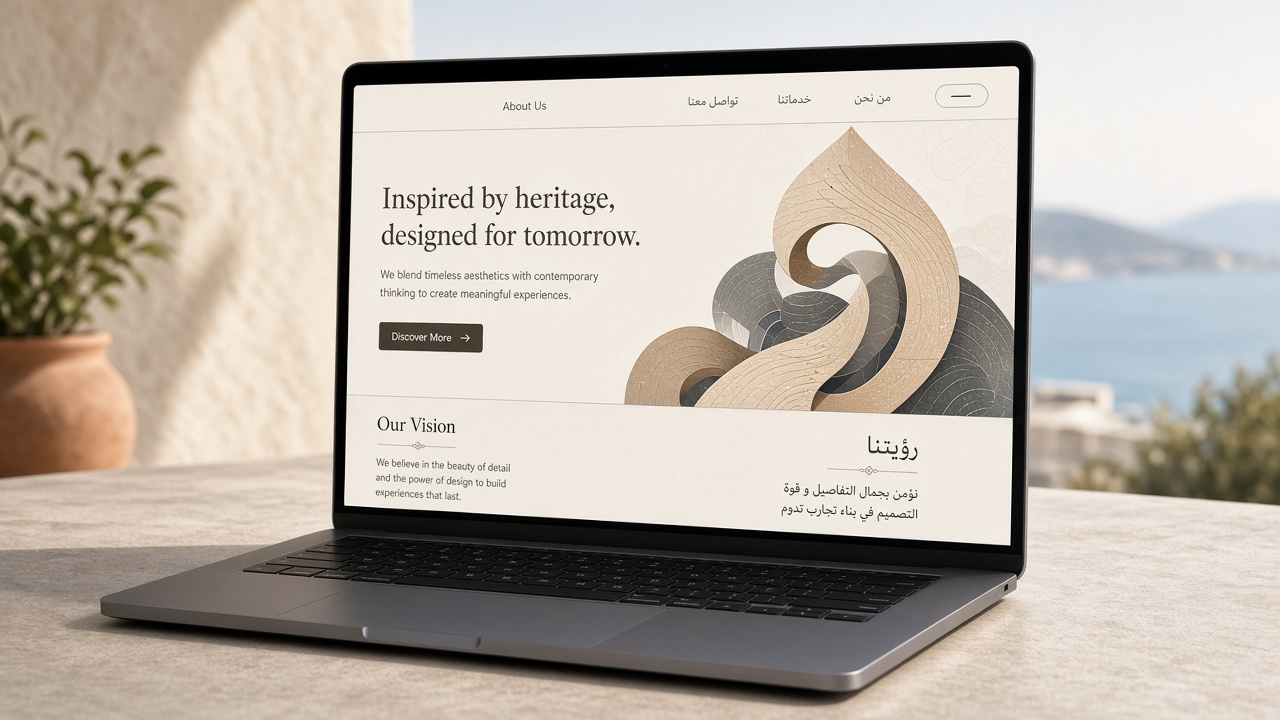
A bilingual website Lebanon brands need is more than a Google Translate widget. Lebanese audiences—and GCC, diaspora, and tourism visitors—switch between Arabic and English constantly. They notice when Arabic is an afterthought: broken alignment, Latin-only fonts, menus that still “feel English,” or SEO that duplicates content without language signals. Done well, Arabic–English design builds trust, improves conversion, and opens regional traffic that monolingual sites leave on the table.
Step to Media designs and builds bilingual experiences as part of website development for Lebanon and GCC clients—treating RTL as a first-class UX system, not a late toggle.
What Bilingual Website Lebanon Projects Must Get Right
Language choice is a product decision. Some pages skew English (export B2B, tech docs); others must lead in Arabic (local services, hospitality, public-facing care). Many Lebanese sites offer both with a persistent language switcher and remembered preference. The bar is consistency: every template—header, forms, checkout, error states, emails—must exist in both languages with equivalent meaning, not abbreviated Arabic stubs.
Stakeholders should agree early on:
- Default language by audience segment (and by geo if you personalize)
- Tone: Modern Standard Arabic vs lighter Levantine flavor for marketing lines
- Who owns translations and ongoing content updates
- Whether URLs use folders (
/ar/,/en/), subdomains, or parameters (folders usually win for SEO clarity)
For broader UX expectations among Lebanese consumers, pair this guide with our notes on modern web design practices in Lebanon.
Real RTL Not Mirrored English
Right-to-left is a layout logic. Flipping a theme with dir="rtl" and calling it done often leaves icons pointing the wrong way, uneven padding, progress steppers that read backwards, and carousels that fight muscle memory. True RTL website design reconsiders:
- Navigation start edge, breadcrumbs, and back patterns
- Form labels, validation messages, and required-field indicators
- Numeric inputs, phone fields, and mixed Arabic/Latin strings
- Media captions, tables, and data dashboards
- Directional icons (arrows, chevrons) vs universal icons (search, close)
CSS logical properties (margin-inline-start, padding-inline, etc.) and careful component testing beat one-off “Arabic CSS overrides.” MDN’s guidance on the dir attribute is a solid baseline for engineers; designers still need Arabic-first wireframes for critical journeys.
Mobile apps face the same discipline—see challenges covered in mobile app development in the Arabic market if your roadmap includes stores as well as the web.
Fonts, Typography, and Visual Culture
Arabic type is not “English with different glyphs.” Line height, letterforms, and weight choices change perceived quality. Pair a well-hinted Arabic family with a complementary Latin family; test at mobile sizes; avoid ultra-light Arabic weights that shimmer on mid-range Androids common in regional markets.
Visual culture cues matter for a bilingual website Lebanon hospitality or retail brand: photography that reflects local and Gulf guests, color contrast that stays readable on sunny outdoor mobile use, and imagery that does not rely on left-reading comic sequences. Luxury and tourism sites especially suffer when Arabic pages reuse cramped English layouts.
SEO: hreflang, Content Parity, and Search Intent
Search engines need clear language and regional signals. Implement hreflang annotations so Arabic and English URLs point to each other correctly, with self-references and an optional x-default for language choosers. Google’s documentation on localized versions of your pages remains the canonical checklist.
Content parity does not mean word-for-word sameness; it means each language page fully answers intent. Thin auto-translated Arabic pages can underperform and frustrate users. Unique titles, meta descriptions, and structured data in the correct language help. Avoid duplicate indexing traps: one canonical per language URL, consistent internal linking within that language, and sitemaps that list both.
Local SEO still applies—Google Business Profile, Arabic and English NAP consistency, and landing pages for services you actually deliver. If you are selecting a build partner, our guide on choosing a website development partner in Lebanon covers process questions beyond design polish.
Tourism, Diaspora & GCC Visitors
Lebanon’s web audience is rarely only residents. Diaspora families book travel and send gifts; Gulf visitors research hospitality and retail; international partners evaluate suppliers in English first. A bilingual site lets each group start in their comfort language and switch without losing the page context—language switchers should map to the equivalent URL, not dump users on the homepage.
Practical patterns:
- Booking and inquiry forms validated in both languages with clear success states
- Currency and contact channels labeled for regional callers
- Fast performance on mobile networks; compressed media; readable tap targets
- Trust signals (policies, secure checkout, real addresses) visible in Arabic and English
Implementation Checklist for Teams
- Content model: every field that customers see has Arabic and English values
- Design system: RTL and LTR variants of components, documented
- QA: native Arabic speakers review UX—not only spelling
- CMS training: editors know how to update both locales without breaking layout
- Analytics: segment by language to see which journeys convert
- Legal/privacy pages available and accurate in both languages
Explore Step to Media projects and our full services mix—including SEO and ongoing support—when you need a partner who ships bilingual systems end to end.
CMS, Performance & Accessibility for Dual Locales
Editors make or break a bilingual website Lebanon launch. Your CMS should expose clear Arabic and English fields, preview RTL layouts, and prevent publishing a page that is “complete” in only one language when policy requires both. Media libraries need alt text in the language of the page; PDFs and downloads should be labeled so users do not open the wrong file.
Performance remains a UX and SEO requirement: Arabic webfonts can be heavier—subset fonts, use modern formats, and preload critical faces carefully. Lazy-load below-fold imagery; compress hero media that greets tourism and GCC visitors on mobile data. Accessibility is not optional: sufficient contrast, focus states, and form labels must work in both directions. Screen-reader language attributes (lang="ar" / lang="en") should match the active locale.
Component libraries and design tokens reduce drift when marketing ships seasonal landing pages. Document spacing, button styles, and card patterns for RTL and LTR once; reuse everywhere. That discipline is cheaper than redesigning every campaign microsite from scratch.
Common Pitfalls (and How to Avoid Them)
- Plugin-only Arabic: Machine widgets without editorial review damage trust—budget human review for key funnels.
- Orphan English CTAs on Arabic pages: Buttons and microcopy must switch with the locale.
- Broken email journeys: Transactional messages should respect the user’s language preference end to end.
- Ignoring mixed strings: Order IDs, brand names, and English SKUs inside Arabic sentences need careful bidi handling.
- SEO cannibalization: Missing hreflang or identical thin pages confuse crawlers and users alike.
When product strategy also includes apps, keep web and mobile language models aligned so customers do not relearn patterns. Cross-link your roadmap with thoughtful mobile planning via our Lebanon mobile app agency guide when both surfaces are in scope.
Soft Next Step
If your current site treats Arabic as a plugin afterthought, it is time for a deliberate bilingual website Lebanon rebuild or redesign. Share your audiences, languages, and must-have templates with Step to Media. Email info@steptomedia.com, call +961 03 510 646, or use the contact page—we will help you plan real RTL UX, typography, and hreflang-ready structure that welcomes local and GCC visitors alike.

No next post available