Mobile App Development Timeline in Lebanon (2026): Phases and Realistic Weeks
 14 Sep
Mobile App Development Timeline in Lebanon (2026): Phases and Realistic Weeks
Founders in Lebanon often ask one question before budget: how long does mobile app development take? The honest answer is “it depends” — but you can still plan with clear phases and week ranges.
This timeline guide is written for Lebanese startups and SMEs shipping iOS/Android apps locally or into the GCC. For delivery options, see our mobile app development service and how to choose a mobile app agency in Lebanon.
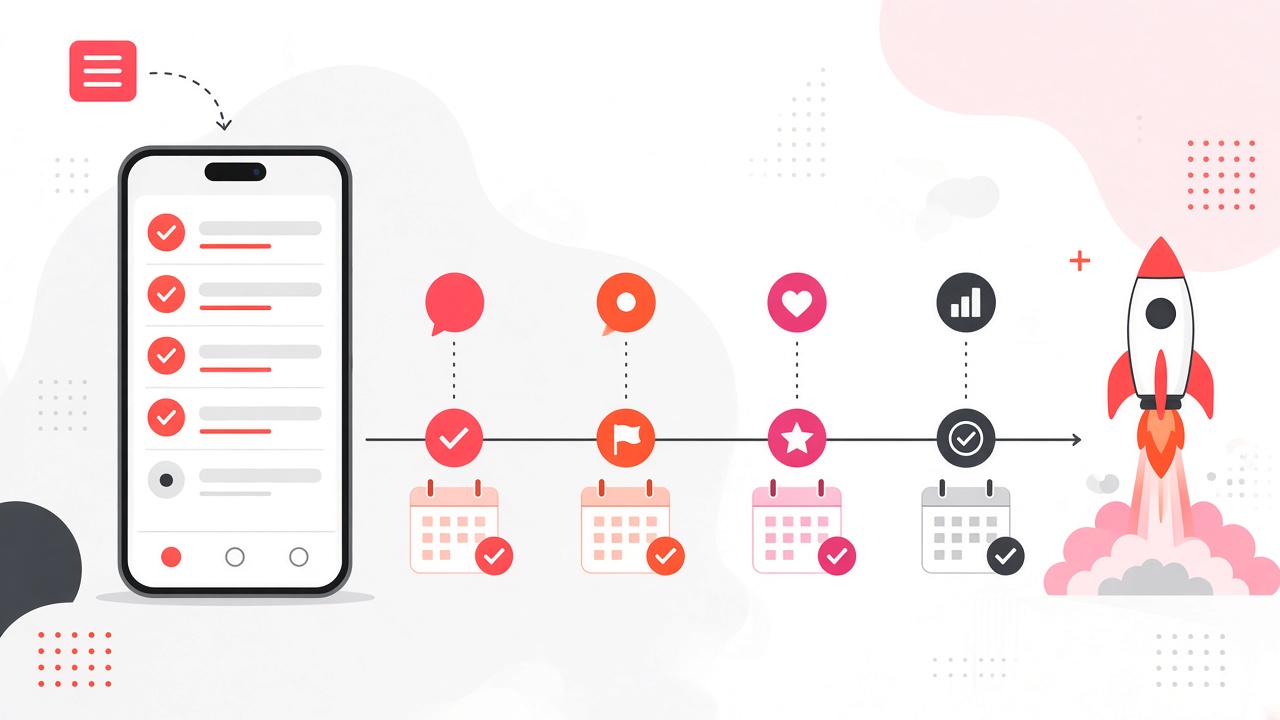
Typical timeline overview
For a focused MVP (one platform strategy, limited features, clear user journey):
- Discovery & scoping: 1–2 weeks
- UX/UI design: 2–4 weeks
- Development (app + API): 6–14 weeks
- QA, hardening, store prep: 2–4 weeks
- Store review buffer: 1–3 weeks (variable)
Complex products (multi-role systems, heavy integrations, bilingual UX polish, offline modes) stretch beyond this. Multi-brand enterprise apps can take multiple quarters.
Phase 1 — Discovery (1–2 weeks)
Define the problem, primary users, MVP boundaries, success metrics, and non-goals. Capture payment, login, languages (Arabic/English), and device constraints early. Skipping discovery is the fastest way to add months later.
Phase 2 — UX/UI (2–4 weeks)
Wireframes → interactive prototype → UI system. Validate the core flow before writing production code. For Lebanon/GCC audiences, plan RTL/bilingual layout early — retrofits cost time. Related: mobile apps in the Arabic market.
Phase 3 — Build (6–14 weeks)
Engineering usually runs in iterations with demos every 1–2 weeks:
- Mobile client (native or cross-platform)
- Backend/API, auth, admin tools
- Integrations (payments, SMS, maps, WhatsApp, ERP)
- Analytics and crash reporting
Cross-platform can shorten calendar time when one team ships iOS + Android together. Native may add parallel tracks. See also Flutter vs React Native for Lebanon/GCC.
Phase 4 — QA and release (2–4 weeks + store buffer)
Device testing, performance on weaker networks, security basics, store listings, privacy labels, and submission. Apple/Google review times vary build buffer into your launch announcement.
What usually delays Lebanese app projects
- Unclear MVP (every stakeholder adds “just one more” feature)
- Late content, legal copy, or brand assets
- Payment/KYC integrations discovered mid-build
- Arabic/RTL treated as a final paint job
- No decision-maker available for weekly demos
How to compress the timeline safely
- Cut to one primary user journey for v1.
- Freeze scope after discovery with a written change process.
- Provide accounts, API keys, and content on a checklist before sprint 1.
- Ship an internal TestFlight/Play track early for real-device feedback.
If you are still choosing build vs buy, read web application vs mobile app: which first? and our MVP guide for Lebanon startups.
Frequently asked questions
Can we build an app in 30 days?
Only for very small scopes with existing design/backend and almost no integrations. Most real MVPs need more than a marketing sprint.
Does bilingual Arabic support add a lot of time?
It adds design and QA effort. Planning it from week one is cheaper than translating screens at the end.
When should we start App Store / Play setup?
Early — developer accounts, branding, privacy policy, and screenshots should not wait until code freeze.
How do we get a timeline for our idea?
Contact Step to Media with your user, must-have features, and target markets. We return a phased plan with milestones.
Book a free consultation to map a realistic mobile app timeline for Lebanon or GCC launch.
Sample 12-week MVP schedule
A common calendar for a cross-platform MVP with one core journey:
- Weeks 1–2: discovery workshop, backlog, clickable prototype kickoff
- Weeks 3–4: UI system + approved main flows
- Weeks 5–10: app + API sprints with biweekly demos
- Weeks 11–12: QA, store assets, soft launch to internal testers
Treat this as a planning template your integrations and bilingual requirements can add dedicated weeks.