AI in Business: Opportunities and Challenges
 2 Jun
2 JunAI in Business: Opportunities and Challenges
AI in Business: Opportunities and Challenges
How Artificial Intelligence Is Transforming Modern Organizations
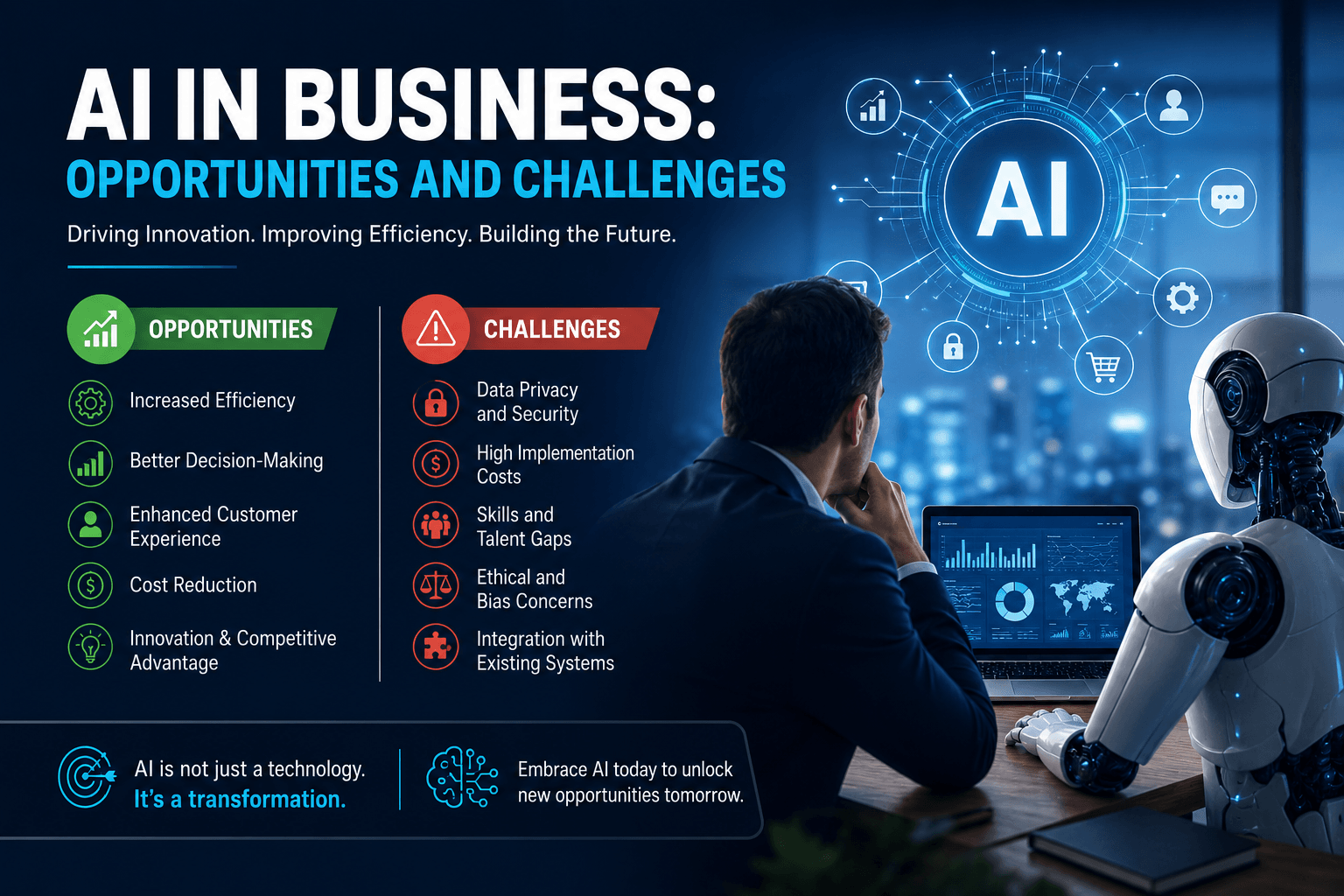
Artificial Intelligence (AI) is no longer a futuristic concept—it’s a powerful business tool that is transforming industries around the world. From automating repetitive tasks to enhancing customer experiences and generating valuable insights from data, AI is helping organizations improve efficiency, reduce costs, and drive innovation.
However, while the opportunities are significant, implementing AI also presents several challenges that businesses must address to achieve long-term success.
In this article, we’ll explore the key opportunities and challenges of AI in business and how organizations can prepare for an AI-driven future.
What Is Artificial Intelligence in Business?
Artificial Intelligence refers to computer systems capable of performing tasks that typically require human intelligence, such as learning, problem-solving, decision-making, language processing, and pattern recognition.
Businesses use AI technologies in various areas, including:
- Customer service
- Data analysis
- Marketing automation
- Predictive analytics
- Supply chain management
- Cybersecurity
- Software development
As AI capabilities continue to evolve, organizations are discovering new ways to leverage these technologies to gain a competitive advantage.
Opportunities of AI in Business
1. Increased Efficiency and Productivity
One of the biggest advantages of AI is automation. AI-powered systems can handle repetitive and time-consuming tasks, allowing employees to focus on strategic and creative work.
Examples include:
- Customer support chatbots
- Automated data entry
- Invoice processing
- Document management
By reducing manual workloads, businesses can improve productivity while lowering operational costs.
2. Better Decision-Making
Modern businesses generate enormous amounts of data every day. AI can analyze this data faster and more accurately than traditional methods, helping leaders make informed decisions based on real-time insights.
Benefits include:
- Improved forecasting
- Risk assessment
- Market trend analysis
- Performance monitoring
Data-driven decision-making helps organizations identify opportunities and respond more effectively to changing market conditions.
3. Enhanced Customer Experience
Customer expectations continue to rise.
AI enables businesses to deliver personalized experiences through:
- Personalized recommendations
- 24/7 customer support
- Intelligent virtual assistants
- Predictive customer service
By understanding customer behavior and preferences, organizations can increase engagement, loyalty, and satisfaction.
4. Cost Reduction
AI can significantly reduce operational expenses by optimizing processes and minimizing human error.
Areas where AI helps reduce costs include:
- Process automation
- Inventory management
- Resource allocation
- Fraud detection
Over time, these efficiencies can generate substantial savings for businesses of all sizes.
5. Innovation and Competitive Advantage
Companies that successfully adopt AI often gain an edge over competitors.
AI enables organizations to:
- Develop smarter products
- Launch services faster
- Identify new business opportunities
- Create innovative customer experiences
As AI technology advances, businesses that embrace innovation will be better positioned for future growth.
Challenges of AI in Business
1. Data Privacy and Security Concerns
AI systems rely heavily on data. Organizations must ensure they collect, store, and process information responsibly while complying with privacy regulations.
Potential risks include:
- Data breaches
- Unauthorized access
- Privacy violations
- Regulatory penalties
Strong cybersecurity measures and governance frameworks are essential for protecting sensitive information.
2. High Implementation Costs
While AI can generate long-term value, the initial investment can be significant.
Businesses may need to invest in:
- Infrastructure upgrades
- AI software and tools
- Employee training
- Specialized expertise
Careful planning is necessary to ensure a positive return on investment.
3. Skills and Talent Gaps
Many organizations struggle to find professionals with AI expertise.
Successful AI adoption often requires:
- Data scientists
- Machine learning engineers
- AI specialists
- Technology consultants
Businesses must invest in training and talent development to fully leverage AI capabilities.
4. Ethical and Bias Concerns
AI systems are only as good as the data used to train them. Biased or incomplete data can lead to unfair outcomes and inaccurate decisions.
Organizations should prioritize:
- Transparent AI practices
- Bias monitoring
- Ethical guidelines
- Human oversight
Responsible AI implementation helps build trust among customers and stakeholders.
5. Integration with Existing Systems
Many businesses operate using legacy software and infrastructure.
Integrating AI into existing environments can be complex and may require:
- System modernization
- Data migration
- Process redesign
- Technical expertise
A clear implementation strategy is critical for successful adoption.
Best Practices for AI Adoption
To maximize the benefits of AI while minimizing risks, businesses should:
- Start with clear objectives
- Focus on high-value use cases
- Invest in data quality
- Maintain strong security measures
- Train employees and leadership teams
- Monitor performance and outcomes regularly
A phased approach often delivers better results than attempting large-scale AI transformations all at once.
The Future of AI in Business
AI is expected to play an increasingly important role in shaping the future of business.
Organizations that embrace AI strategically can improve efficiency, strengthen customer relationships, and uncover new growth opportunities. At the same time, success requires careful planning, responsible implementation, and ongoing investment in people and technology.
The companies that balance innovation with governance will be best positioned to thrive in the AI-powered economy.
Ready to Leverage AI for Your Business?
Whether you’re exploring AI solutions, automating business processes, or developing intelligent applications, our team can help you navigate the opportunities and challenges of AI adoption.
Contact StepToMedia today to discover how AI-powered solutions can drive growth, efficiency, and innovation across your organization.
Frequently Asked Questions
What is AI in business?
AI in business refers to the use of artificial intelligence technologies to automate processes, analyze data, improve decision-making, enhance customer experiences, and increase operational efficiency.
How can AI benefit businesses?
AI can help businesses improve productivity, reduce costs, automate repetitive tasks, deliver personalized customer experiences, and generate valuable insights from large amounts of data.
Is AI only useful for large companies?
No. Businesses of all sizes can benefit from AI. Many affordable AI tools are available for small and medium-sized businesses, helping them streamline operations and compete more effectively.
What are the biggest challenges of implementing AI?
Common challenges include data privacy concerns, high implementation costs, integration with existing systems, talent shortages, and ensuring ethical and unbiased AI usage.
01 Jun, 2026
Behind the Scenes: Our Software Development Process
No next post available