Ecommerce Website Development Lebanon: Stores Built for GCC Growth
 10 Sep
Ecommerce Website Development Lebanon: Stores Built for GCC Growth
Ecommerce website development Lebanon retailers and regional brands invest in today must do more than look like a catalog online. Shoppers across Lebanon and the GCC expect fast mobile experiences, familiar payment options—including cash on delivery where it still drives trust—multi-currency clarity, and stores that can rank and convert under real network conditions. This guide explains how to plan and build an online store that sells in Lebanon and scales into Gulf markets without rebuilding every season.
Whether you are launching your first store or replacing a slow, template-heavy site, treat ecommerce as a product: checkout friction, operations, SEO, and performance are part of the same build—not afterthoughts.
Why Ecommerce Website Development Lebanon Brands Need Regional Fit
Lebanese merchants often sell locally while marketing into the UAE, KSA, Qatar, Kuwait, Bahrain, and Oman. That creates a dual reality: local payment habits and logistics on one side, Gulf pricing, shipping expectations, and brand polish on the other. Generic “global Shopify themes” rarely encode those nuances out of the box.
Strong web development for commerce means mapping your catalog, fulfillment, and customer support flows before pixels. Step to Media helps Lebanon and GCC brands design stores around how people actually buy—WhatsApp follow-ups, COD where relevant, card gateways, and mobile-first browsing—rather than around a demo that only works on office Wi-Fi.
Payments, COD, and Multi-Currency Without Chaos
Payment design is where many Lebanon ecommerce projects succeed or stall. Your storefront should present options customers already trust, while your backend stays PCI-conscious and operationally clear for your team.
Card and regional gateways
Integrate reputable gateways that support the cards and wallets your audiences use. Confirm settlement currencies, fees, chargeback workflows, and how failed payments are messaged on mobile. Never store raw card data on your own servers unless you are purpose-built for it.
Cash on delivery (COD)
In Lebanon—and still in parts of regional retail—COD remains a conversion lever. Treat it as a first-class checkout path: clear fees or free-threshold rules, order confirmation messaging, and admin tools so your team can mark collected, returned, or cancelled without spreadsheet gymnastics.
Multi-currency and pricing honesty
If you sell across borders, display prices in currencies buyers understand while keeping your inventory and accounting logic coherent. Ambiguous FX or “price on WhatsApp only” patterns erode trust on product pages that should convert. Multi-currency UX is a core requirement of serious ecommerce website development Lebanon teams deliver for GCC growth—not a plugin afterthought.
Mobile-First Checkout: Where Revenue Is Won or Lost
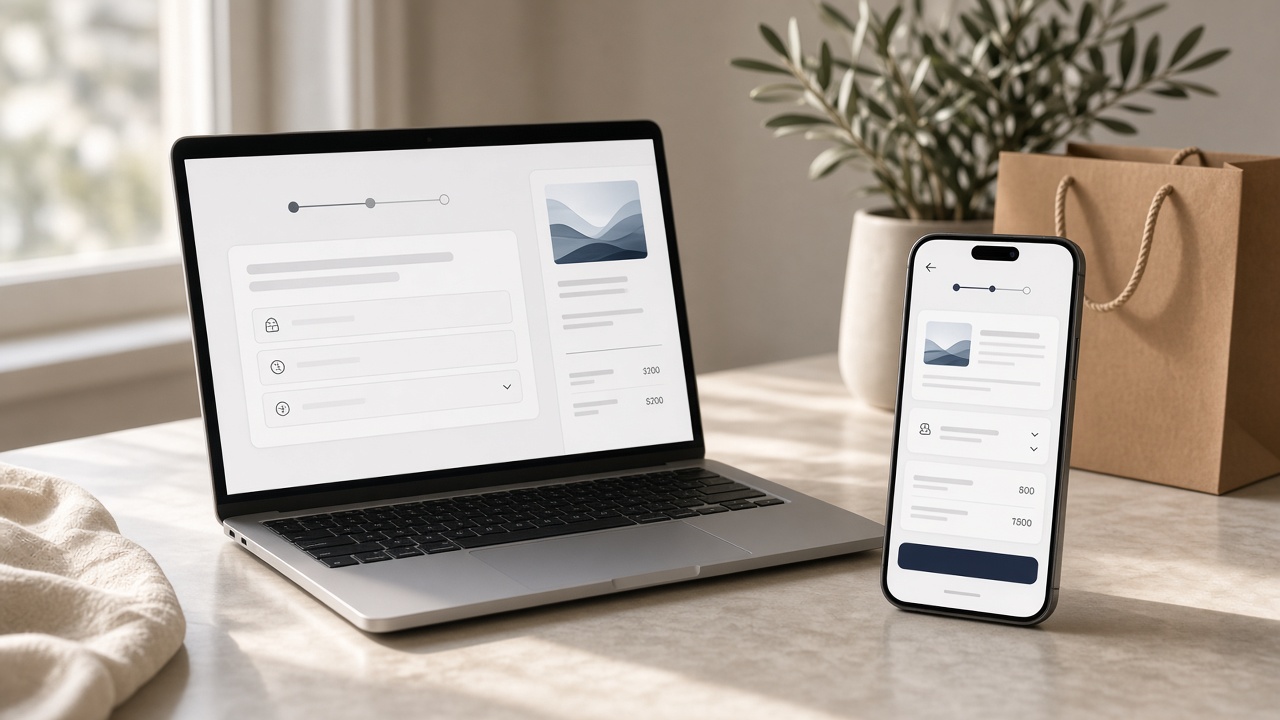
Most discovery and purchase attempts happen on phones. Mobile-first checkout is not a smaller desktop form—it is a redesigned path: large tap targets, minimal fields, guest checkout where appropriate, saved addresses, and progress that survives app switches to banking or OTP screens.
- Keep critical CTAs visible without fighting sticky banners.
- Compress images and defer non-essential scripts on product and cart pages.
- Test on mid-range Android devices common in regional markets, not only flagship iPhones.
- Support Arabic RTL layouts properly when you serve Arabic-first audiences.
Abandonment often looks like “marketing” but is usually UX and performance. Ask your partner for Core Web Vitals targets on collection, product, and checkout templates before launch.
Performance, Catalog Architecture, and Ecommerce SEO
A beautiful theme that loads in five seconds will lose to a simpler store that feels instant. Performance is SEO and paid-media ROI: slow pages waste ad spend and suppress organic rankings.
Technical foundations
- Clean URL structures for categories and products
- Unique titles, meta descriptions, and Product schema where appropriate
- XML sitemaps, canonical rules, and careful handling of filters/faceted navigation
- CDN delivery with strong Middle East edge coverage where possible
For engineering baselines on the open web, teams often lean on references such as MDN Web Docs and platform documentation from Google Search Central when aligning crawlability and structured data. Your agency should translate those standards into a store your merchandisers can actually update.
Platform Choice: Shopify, Headless, or Custom?
There is no single winner—only fit to catalog size, customization needs, and internal skills.
- Managed ecommerce platforms — Fast to launch for many catalogs; strong app ecosystems; watch theme bloat and checkout customization limits.
- WordPress/WooCommerce-style stacks — Familiar for content-heavy brands; require disciplined hosting, security, and plugin hygiene.
- Custom or headless builds — Best when workflows, B2B pricing, or multi-brand operations outgrow templates; demand clearer product ownership.
Step to Media evaluates stack choices against your roadmap—not trends. Explore related services when your program also needs a marketing site, integrations, or mobile companions beside the store.
Operations: Admin Workflows Merchants Will Actually Use
Ecommerce fails quietly when operations are painful. Build admin paths for order status, inventory adjustments, promotions, returns, and customer notes. Train your team. Document how COD orders move from “placed” to “delivered.” If you grow into GCC fulfillment partners, plan API or CSV handoffs early.
For inspiration on experiential digital craft beyond pure retail, browse the projects gallery—including work like Zaitunay Bay—to see how Step to Media balances brand polish with usable digital products.
A Practical Build Checklist for Lebanon & GCC Stores
- Define markets, languages, currencies, and primary conversion paths.
- List payment methods (cards, COD, wallets) and refund policies in plain language.
- Prioritize mobile product + checkout templates in design and QA.
- Set performance budgets and SEO requirements before theme shopping.
- Map shipping zones, duties messaging, and support channels (email, phone, WhatsApp).
- Agree on analytics, pixel hygiene, and post-launch iteration windows.
Vendors who skip discovery and jump to mockups often rediscover these items mid-build—when changes cost more.
Analytics, Remarketing, and Post-Launch Iteration
Launch is the midpoint, not the finish. Instrument funnels from collection → product → cart → checkout → purchase (and COD confirmation). Separate device segments so mobile regressions are obvious. Keep marketing pixels organized so legal and performance teams are not fighting duplicate scripts.
Plan a 30–60 day optimization window: refine shipping messaging, simplify forms, improve search and filters, and A/B test product-page proof points. The partners who schedule that window up front treat ecommerce website development Lebanon programs as growth systems rather than one-off theme installs.
Soft Next Step
If you are planning ecommerce website development Lebanon shoppers and GCC buyers will trust, bring your catalog size, markets, and payment constraints to a short scoping call. Reach Step to Media via contact, info@steptomedia.com, or +961 03 510 646. We will help you choose a pragmatic stack, a mobile-first checkout plan, and a launch path that protects both conversion and SEO.
Online stores win when payments feel familiar, pages feel fast, and operations stay calm after the first sale spike. Build for that reality—and your Lebanon base becomes a platform for regional growth rather than a compromise.