Secure App Development in Lebanon and the GCC: OWASP, Pen Testing, and Data Protection
Secure App Development in Lebanon and the GCC: OWASP, Pen Testing, and Data Protection
 19 Nov
Secure App Development in Lebanon and the GCC: OWASP, Pen Testing, and Data Protection
Secure app development in Lebanon and the GCC is no longer a nice extra. Portals and apps now hold payments, personal data and company files, and one weak point can expose all of it. This 2026 guide explains what a secure build looks like in practice: the OWASP lists developers work from, the controls every web and mobile app needs, where penetration testing fits, data protection laws in Lebanon, Saudi Arabia and the UAE, and what to ask your development team.
Step To Media is a software development agency in Lebanon based in Mkalles. We build websites, web applications, mobile apps and custom software for businesses in Lebanon and the GCC.
Why Security Has to Start at the Design Stage
Many teams treat security as a test at the end: build the app, run a scan, fix what it finds. That catches some problems, but the most expensive ones are design decisions: who can see which records, how users sign in and which systems trust each other. Changing them after launch means rewriting large parts of the app.
A secure project starts with a short threat model during discovery. List the data the app holds, who should and should not reach it, and what would happen if it leaked or was changed. A loyalty app and a fintech wallet need very different protection.
The OWASP Lists Developers Work From
The Open Worldwide Application Security Project (OWASP) is a non-profit that publishes free security references. Three matter most:
- OWASP Top 10:2025: the most critical web application security risks. Broken access control is still number one, followed by security misconfiguration and software supply chain failures, a category that now covers vulnerable libraries and compromised build tools.
- OWASP Mobile Top 10: the main risks for iOS and Android apps, such as improper credential use, insecure data storage and insecure communication.
- OWASP ASVS and MASVS: detailed verification standards for web and mobile apps. They turn “make it secure” into a checklist of testable requirements that can go into a contract or a test plan.
Security Controls Every Web Application Needs
Every business web app or portal should cover these basics:
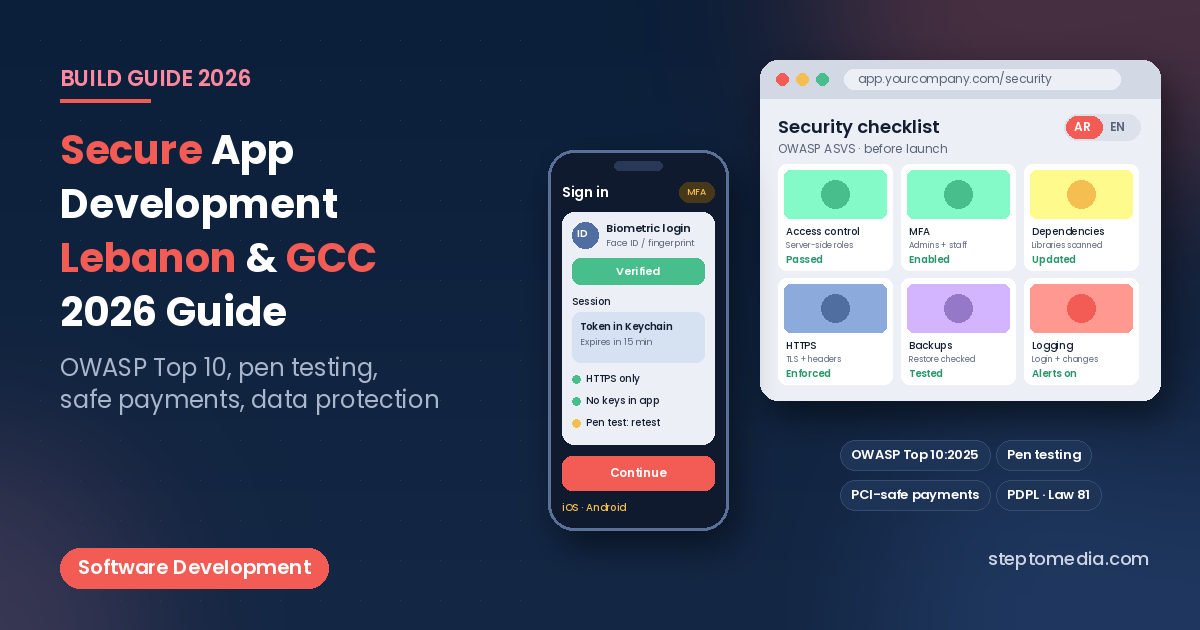
- Access control on the server: every request checks who the user is and whether they may see or change that specific record.
- Strong authentication: hashed passwords, rate limits on login attempts, secure password reset and two-factor authentication for admins and staff, ideally for everyone.
- Input handling: parameterized database queries, output encoding and validated file uploads to block injection and cross-site scripting.
- Encryption: HTTPS everywhere, encrypted backups and extra protection for sensitive fields such as ID numbers or health data.
- Secure configuration: no default passwords, debug mode off in production, secrets kept out of the code repository and correct security headers.
- Dependency management: a list of the libraries the app uses, regular updates and automated alerts for known vulnerabilities.
- Logging and alerts: records of logins and sensitive actions, with alerts when something looks wrong.
These controls apply to every website development project with user accounts, and even more to portals and dashboards built as custom software.
Extra Steps for Mobile Apps
A mobile app runs on a device you do not control, so assume it can be inspected. Good practice includes:
- Never storing API keys, payment secrets or business logic that must stay private inside the app. Sensitive work belongs on the server.
- Saving tokens in the iOS Keychain or Android Keystore rather than plain local storage.
- Using HTTPS only, with the platform protections that block unencrypted traffic left on.
- Protecting the back end API like a web app, since attackers can call it directly.
Our mobile app development work follows the same rule: the app is a client, and the server enforces the rules.
Payments and Card Data
Storing card numbers yourself brings heavy PCI DSS obligations. Most apps in Lebanon and the GCC avoid this by using a payment gateway’s hosted payment page or secure card fields, so card data goes straight to the gateway and never touches your server. Payment callbacks and webhooks must also be verified, so nobody can fake a “paid” status. Our guide to payment gateways in Lebanon covers the options, and the fintech app development guide goes deeper into wallets and financial products.
Where Penetration Testing Fits
A penetration test is a controlled attack on your app by security specialists, who try to break in the way a real attacker would and report what they find. It is most useful:
- Before launching an app that handles payments, health data or large amounts of personal data.
- When a bank, enterprise client or regulator asks for a test report.
- After major changes, such as a new login system or a new public API.
Pen testing works best alongside secure development, not instead of it. Scanners and code review find many issues during the build; the pen test looks for logic flaws that tools miss. Many companies use an independent testing firm, and the schedule should leave time to fix findings and retest. Functional QA is a separate step, covered in our article on mobile app testing.
Data Protection Laws in Lebanon and the GCC
Security and privacy rules differ by market. This is a short overview, not legal advice:
- Lebanon: Law No. 81 of 2018 on electronic transactions and personal data sets rules for processing personal data.
- Saudi Arabia: the Personal Data Protection Law (PDPL), supervised by SDAIA, has been enforced since September 2024 and includes rules on transferring personal data outside the Kingdom. Government entities and critical sectors also follow cybersecurity controls from the National Cybersecurity Authority.
- UAE: Federal Decree-Law No. 45 of 2021 on personal data protection applies onshore, while free zones such as DIFC and ADGM have their own data protection regimes.
These laws affect where you host data, consent and breach response. Confirm the requirements with a legal adviser before development starts.
Security After Launch
An app that was secure on launch day will not stay secure on its own. Frameworks and libraries publish security fixes all the time. Budget for regular updates, monitoring, tested backups and an agreed response plan if something goes wrong. Our guide to website and app maintenance in Lebanon explains what a support plan should include.
Questions to Ask Your Development Team
- How do you check permissions on the server for every request?
- Which OWASP references do you follow, and how do you test against them?
- Where will our data be hosted, and who has access to production?
- How do you track and update third-party libraries?
- Will you support an independent penetration test and fix the findings?
If you are planning a portal, app or platform that handles sensitive data, you can read how we work as a software and web development company in Lebanon, or contact us to talk through your project.
Frequently Asked Questions
What is secure app development?
Secure app development means building security into every stage of a web or mobile project, from design and coding to testing and maintenance, instead of adding it at the end.
What is the OWASP Top 10?
The OWASP Top 10 is a free list of the most critical web application security risks, published by the non-profit OWASP community. The 2025 edition puts broken access control first, followed by security misconfiguration and software supply chain failures.
Does every app need a penetration test?
Not every small website does, but apps that handle payments, health records or large amounts of personal data should be tested before launch and after major changes.
How do apps in Lebanon accept card payments securely?
Most apps use a payment gateway’s hosted payment page or secure card fields, so card numbers go straight to the gateway and are never stored on the app’s own server. This reduces PCI DSS scope and risk.
Which data protection laws apply to apps in Lebanon and the GCC?
Lebanon has Law No. 81 of 2018 on electronic transactions and personal data, Saudi Arabia has the Personal Data Protection Law (PDPL), and the UAE has Federal Decree-Law No. 45 of 2021, with separate rules in free zones such as DIFC and ADGM. Check the details with a legal adviser for your sector.
Where is Step To Media located?
Step To Media is a software development agency at 2001 Bldg, Bloc A, 3rd floor, Main road, Mkalles, Lebanon. We build websites, web applications, mobile apps and custom software for clients in Lebanon and the GCC.
No next post available