How Long Website Development Takes in Lebanon: A Phase-by-Phase Plan
 1 Oct
1 OctHow Long Website Development Takes in Lebanon: A Phase-by-Phase Plan
How long does website development take in Lebanon? The useful answer is a phase plan, not a single number of days. A short service site with approved copy can go from kickoff to a public URL in a few weeks. A bilingual corporate site, an online store, or a portal takes longer, because content and integrations add queues of their own.
The bands below are planning ranges teams use when reviews come back on time. They are not a Step To Media delivery promise, and they are not a price list. The date that matters is the one in your proposal after discovery. Step To Media is a software development agency in Lebanon. We confirm a calendar only after scope is written down. For the build itself, start from our website development service.
What the calendar is measuring
Calendar time is not engineering hours. A website waits on which pages exist, which sentence is final, which login works, and who may approve a template.
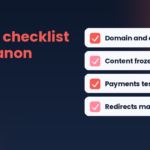
Start the clock at kickoff, when the brief, access, and a named approver are in place. Keep three clocks separate:
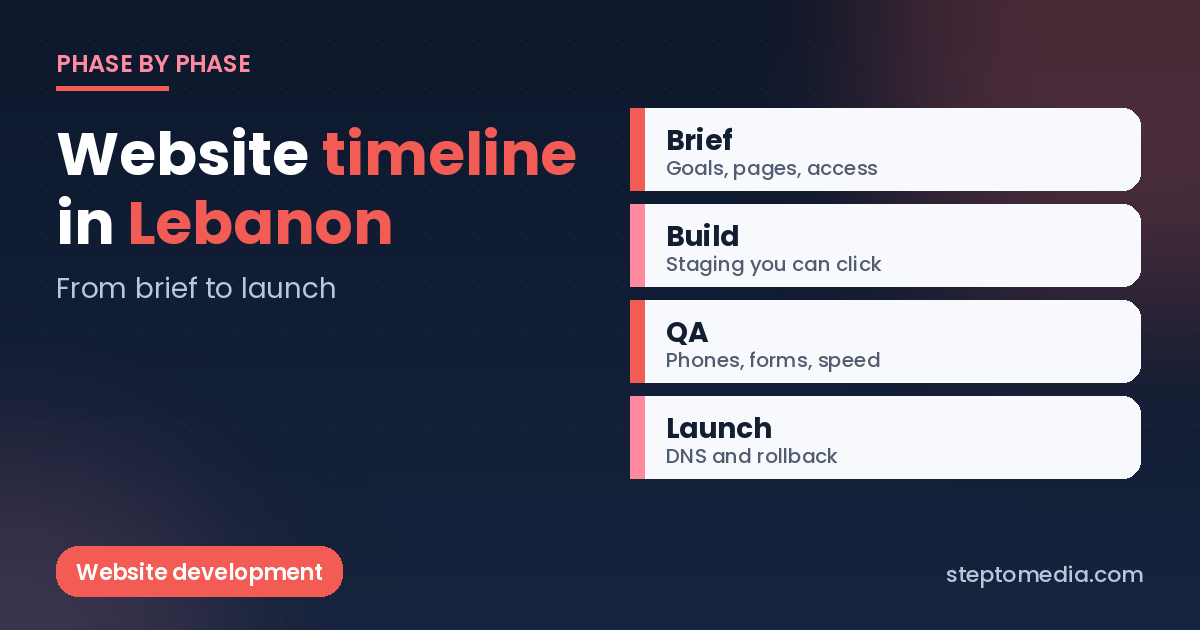
- Discovery, until the sitemap and template list are agreed.
- Build, on a staging URL your team can open on a phone.
- Launch, once content is frozen, checks pass, and DNS is ready.
Duration and budget move together. Published market ranges for Lebanon, which are not Step To Media’s official prices, are in our website cost in Lebanon guide. Use that page for money and this one for sequence.
Planning bands by type of website
Use this table before you ask for a quote. It assumes a responsive build, a CMS your staff can edit, and review replies in about two or three working days. Add time if copy, photos, or a payment account are not ready. One language is assumed unless the row says otherwise.
| Website type | Typical planning band | What usually sets the length |
|---|---|---|
| Landing page or short service site | About 3–6 weeks after kickoff | One to three templates, forms, basic on-page SEO |
| Corporate or multi-page business site | About 6–10 weeks | More templates, a resources section, CRM or WhatsApp, several reviewers |
| Arabic and English together | Add about 2–4 weeks to the single-language band | Right-to-left layout, translations, language tags, QA both ways |
| Online store | About 8–16 weeks | Catalogue, checkout, local payments, shipping and price display |
| Portal or light web application | About 10–20 weeks for a first release | Accounts, roles, and one workflow. Ship a slice, not everything |
A signed proposal can sit outside these bands. If the new site replaces one that already earns visits, map old URLs first. See legacy website modernization in Lebanon.
Phase by phase
This sequence is for websites only. There is no app-store review. The slips happen at content, template approval, staging QA, and the DNS cutover.
1. Brief and access
Write the goal: leads, bookings, orders, or recruitment. Name audiences, languages, and the pages that must exist on day one. List each integration by product name. Put the registrar, hosting, analytics, and current CMS in the company name, or hand over access. This step is often a few days to about two weeks. It stalls when nobody is allowed to decide the page list.
2. Sitemap and content
Agree templates, not just page titles. Ten service pages on one template are faster than ten unique layouts. If your team writes the copy, put deadlines on the same calendar as the build. Empty fields are why a “six-week” site is still on staging in month three.
For Arabic and English, choose the default language, the URL pattern, and whether both launch together. Pasting Arabic in the night before go-live leaves the layout unfinished. See bilingual Arabic and English websites.
3. Templates people use
This phase is the interface: hierarchy, mobile layout, forms, and error states. It is not a branding programme. Approve a small set of templates, then let other pages follow. Two revision rounds is a normal plan. Open-ended rounds are how dates die.
Choose WordPress or a custom front end here, not after build has started. The comparison is WordPress versus a custom website in Lebanon.
4. Build on staging
Engineering stays on a private URL. Review it on a phone. A merchant account can take longer than the code that calls it. Read payment gateways for websites and apps in Lebanon before you promise checkout. For catalogues, see e-commerce website development.
5. Real content, QA, and speed
Load real copy and images, then test forms, the 404 page, links, and both languages on a mid-range phone. Agree what “fast enough” means before the last week. Google’s Core Web Vitals notes define loading, response, and stability. A perfect score on placeholder images is not the goal.
6. Launch and the next two weeks
Book a staffed window: backup, DNS, SSL, redirects, analytics, and a rollback. Map old addresses before that day. Google’s note on 301 redirects is why each hop should be permanent and direct. The next two weeks are for fixes, not new sections. Use the website launch checklist for companies in Lebanon so nothing important is left in chat.
What usually adds weeks
- Copy or product data arrives late, or in one language only.
- No named approver, so every screen waits on a group chat.
- New templates appear after design sign-off.
- Registrar, hosting, or payment accounts are missing.
- The old site has no URL export, so redirects are invented on launch day.
- Reviews happen only on office desktops, and mobile issues show up last.
Do not reuse an app schedule
An iOS or Android product includes store review and device checks. That calendar is separate: the mobile app development timeline in Lebanon. Do not copy it onto a website. Run both only when content and APIs are shared on purpose.
How to protect the date you were given
- Name one approver and a backup, with a reply window in the agreement.
- Freeze the template list before build. A new template is a change request.
- Put content deadlines on the development schedule.
- Open domain, hosting, and payment accounts before build, in the company name.
- Review staging on a phone every week.
- Book launch as a slot with a rollback, not as “when it feels done.”
Questions people ask before they book
How long does website development take in Lebanon?
A short service site is often planned at about 3–6 weeks after kickoff when content is ready. A multi-page business site is often about 6–10 weeks. Stores and portals commonly need longer. These are planning bands, not a Step To Media promise. The proposal sets the date.
What makes a website project take longer?
Late copy, unnamed approvers, new templates after sign-off, missing domain or payment accounts, and an old site with no redirect map. A second language and real integrations add time too, and they belong in the plan from the start.
Can a business website launch in under a month?
Sometimes, if the page list is small, copy is already approved, there is one language, and integrations stop at a form and analytics. It is a poor plan for a catalogue, a bilingual corporate site, or online payment.
Does Arabic and English double the timeline?
Not if translations are ready and right-to-left layout is designed from the start. Teams often add a few weeks, not a second project. It becomes a second project when Arabic is pasted onto a finished English site.
Should we wait for every page of copy before kickoff?
Wait until the sitemap and the first templates have real sample content. You do not need the whole archive on day one. You do need owners and dates for the rest, or the build stops on empty fields.
Is an online store on the same timeline as a brochure site?
No. A store adds catalogue structure, checkout, a payment provider, and shipping rules. Do not quote a brochure timeline for it.
Ask for a phase plan, not a single date
Contact Step To Media with the pages you need, the languages, and whether you are replacing a live site. We will reply with questions, a practical first phase, and the next step toward a proposal. You can also email info@steptomedia.com or call +961 3 510 646.
27 Sep, 2026
App Development Cost in Dubai & Saudi Arabia (2026)
01 Oct, 2026
Website Go-Live Checklist for Companies in Lebanon