Hotel Booking Website Development in Lebanon and the GCC: Rooms, Availability, and Direct Bookings
Hotel Booking Website Development in Lebanon and the GCC: Rooms, Availability, and Direct Bookings
 9 Nov
Hotel Booking Website Development in Lebanon and the GCC: Rooms, Availability, and Direct Bookings
Hotels and guesthouses in Lebanon and the Gulf often take reservations through a mix of online travel agencies, phone calls, WhatsApp chats, and a shared spreadsheet. Together they create double bookings, slow replies, and commission on guests who would have booked directly. Hotel booking website development means building a direct-booking product: room types and inventory, a live availability calendar, rates and deposits, secure payment, guest messaging, and an admin panel your front desk actually uses.
This 2026 guide covers features, inventory, OTAs, deposits, guest messaging, Arabic RTL, mobile, a build plan, and budgeting.
Why Hotels and Guesthouses Need a Direct-Booking Website
A brochure website says “we have rooms.” A direct-booking website answers “is this room free on these dates, what does it cost, and can I confirm now.” When that answer lives in someone’s phone, guests wait and often book elsewhere. A direct-booking site helps when you need:
- Instant answers: guests pick dates and see real availability and prices without waiting for a reply.
- Direct relationships: the guest’s contact details, preferences, and booking history stay with you.
- Lower dependence on intermediaries: every direct booking is one that does not carry a third-party commission.
- One source of truth: a single calendar for website, phone, and walk-in bookings, so staff stop cross-checking notebooks.
This is different from travel agency website development, which sells tours and packages combining flights, hotels, and activities from many suppliers. It is also different from booking systems for clinics and salons, which schedule time slots with staff. A hotel booking website sells nights in your own rooms.
Core Features of Hotel Booking Website Development
Scope version one around the stay your guests book most often:
- Room types and inventory: each room type with photos, bed setup, capacity, amenities, and the number of physical rooms you can sell.
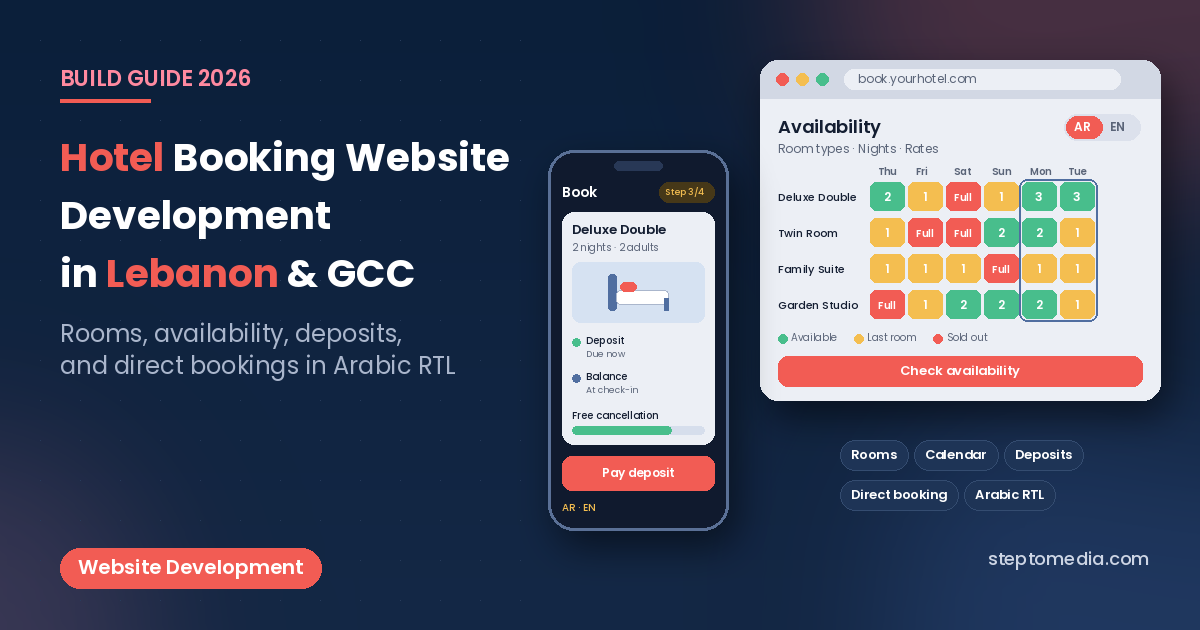
- Availability calendar: a date-range search that checks every night of the stay, respects minimum stays and closed dates, and never sells the same room twice.
- Rates and rules: seasonal and weekend prices, extra-guest charges, children policies, and simple promo codes, all editable without a developer.
- Booking flow: dates, room, guest details, special requests, and a clear summary of price, deposit, and cancellation terms before payment.
- Confirmations: automatic email (and optional WhatsApp) confirmation with booking reference, dates, directions, and check-in time.
Also plan add-ons such as breakfast or airport pickup, plus basic occupancy and channel reports.
Room Inventory and Avoiding Double Bookings
The calendar is the heart of the product. Design inventory carefully:
- Type vs unit: sell by room type (“Deluxe Double, 4 available”) and assign the specific room at check-in, or sell named units for guesthouses and villas where each room is unique.
- Holds and timeouts: place a short hold while a guest pays, then release the room automatically if payment does not complete.
- Manual bookings: phone, walk-in, and WhatsApp reservations entered by staff reduce the same inventory as online bookings.
- Blocks and maintenance: close rooms for repairs, owner use, or group allocations without deleting rates.
Our car rental app development guide covers similar date-range availability logic for fleets.
Direct Booking vs OTAs: Working With Both
Online travel agencies bring visibility, and most properties keep listing on them. The goal of a direct-booking website is balance, not replacing every channel. Practical steps:
- Sync availability: connect your calendar to OTA listings through a channel manager or calendar feeds, so a room booked in one place closes everywhere.
- Give a reason to book direct: flexible cancellation, a welcome extra, or member rates—whatever your contracts allow.
- Make direct easy: a fast mobile booking flow, clear prices, and quick replies on WhatsApp.
- Track the source: record where each booking came from so you can see how direct share changes over time.
We do not name vendors; choose sync tools that fit your listings and confirm what each OTA contract allows on pricing.
Deposits, Payments, and Cancellation Policies
Decide payment rules before design. Common models include full prepayment, a deposit with the balance at check-in, or pay-at-property with card guarantee. The site should show the deposit, balance, currency, and cancellation deadline clearly, and staff should be able to record cash or transfer balances. For gateways, currencies, and refunds in Lebanon and the GCC, see our payment gateway guide for websites and apps. Never store raw card numbers on your own server; use the gateway’s hosted or tokenised flows.
Guest Messaging and Pre-Arrival Communication
Plan templated messages for confirmation, a pre-arrival reminder with directions and check-in time, an optional online check-in form, and a post-stay thank-you. WhatsApp is often the channel guests in the region reply to fastest; use opt-in, approved templates, and frequency limits. See API integration for payments, ERP, and WhatsApp.
Arabic RTL and Bilingual Lebanon–GCC Guests
Guests may search in Arabic, English, or French. Build true RTL layouts for Arabic room pages and the booking flow, linked language versions of each room, bilingual confirmation templates, and clear currency display. See our guide to bilingual Arabic-English websites.
Mobile Booking and Companion Apps
Many guests book from a phone, often the same day. Make the mobile-web flow excellent first: fast pages, compressed photos, a simple date picker, and few form fields. A native app makes sense mainly for groups with several properties or a loyalty programme; feed it from the same booking APIs. See web app vs mobile app, mobile app UX for Lebanon and the GCC, and why slow websites hurt sales.
Custom Build vs Packaged Booking Engine
Packaged booking engines and plugins can be faster for a small guesthouse with standard rooms and rates. A custom build fits multi-property groups, unusual rate rules, bilingual UX packaged screens cannot match, or integrations with your own accounting or ERP. Compare WordPress vs a custom website and custom software vs SaaS.
A Practical Build Plan
- Map rooms and rules: room types, units, rates, seasons, minimum stays, deposits, and cancellation terms.
- Choose build shape: configure a packaged engine if it fits, or build custom when rules, languages, or integrations demand it.
- Design pages and booking flow: room pages, availability search, checkout, confirmations, and the staff admin panel.
- Integrate carefully: payment gateway, OTA availability sync, email, and optional WhatsApp.
- Test and launch: run test bookings across dates, cancellations, and refunds, then go live using our website launch checklist.
Hotel Booking Website Development: Cost and Timeline
We don’t quote fixed prices without a scope. Drivers include number of properties and room types, rate complexity, languages, payment model, OTA sync, and messaging. For budgeting see website cost in Lebanon and custom software development cost in Lebanon, plus our website development timeline. After launch, plan updates with website and app maintenance, and improve the booking funnel with website conversion UX for Lebanon SMEs.
How Step To Media Can Help
Step To Media builds websites, mobile apps, and custom software from Mkalles for clients in Lebanon and the Gulf. Explore website development, custom software development, and mobile app development. Learn more as a software and web development company in Lebanon or software development agency in Lebanon. Planning a direct-booking website? Contact us with your room types, rate rules, payment model, and the channels you sell on today.
Frequently Asked Questions
What is hotel booking website development?
It means building a website where guests check live room availability, see prices and policies, pay a deposit or full amount, and get instant confirmation, with an admin panel for your staff.
Can a direct-booking website work alongside OTAs?
Yes. Most properties keep their OTA listings and sync availability through a channel manager or calendar feeds, so a room booked on one channel closes on the others.
How do we avoid double bookings?
Use one inventory for all channels, short payment holds that release automatically, staff entry for phone and walk-in bookings, and availability sync with every listing you keep.
Should a guesthouse use a packaged booking engine or a custom build?
A packaged engine often fits a small guesthouse with standard rooms. Custom fits multi-property groups, unusual rate rules, bilingual UX, or integrations a packaged tool cannot deliver.
Do hotel websites in Lebanon and the GCC need Arabic RTL?
Many do. Plan RTL room pages and booking flows, linked Arabic and English versions of each room, and bilingual confirmation messages your team can maintain.
No next post available